Three Tests
This article is a response to the fourth session of a Church Age Book curriculum taught by Trevor Emond on November 25, 2018, covering Lesson 7.[1] All timestamps refer to that recording. The teaching begins at approximately [29:29].
Three Tests
I enjoyed this lesson more than any of the prior sessions because Trevor Emond spends an hour teaching his congregation how to establish whether an ancient document is reliable. Not how to feel about the Bible. How to test it. He lays out three criteria, works through them one at a time, and shows his people the evidence. I did this work myself when I started to deconstruct my faith.
He calls them the honesty test, the telephone test, and the corroboration test [39:57]. The names normally used for these tests are: the internal, bibliographical and external evidence tests. They are the standard apparatus of Christian apologetics.
His treatment is good. He notes that fiction announces itself, opening with "a long time ago in a galaxy far away," while Luke opens by naming Herod and Zacharias and the course of Abia, details that could have got him caught [46:56]. He explains the criterion of embarrassment: Peter's denial, Jesus calling Peter Satan, the disciples failing to understand, and the empty tomb discovered by women whose testimony would not have been received in a court [1:03:09]. He gives the manuscript numbers, the gap between event and earliest copy, the comparison with Julius Caesar and Homer, the nine non-Christian sources for Jesus against ten documents for Tiberius Caesar.
And he explains why he bothers, at [33:42]:
If it is absolutely 100% the truth, and if we're going to believe anything about history, we have to believe what the Bible says, then you owe your life to it.
He is right. That is exactly the reason to care whether a thing is true.
So I want to take his three tests seriously, which means doing the one thing the lesson never does with them.
Where the tests came from
A small point first, because it is quietly interesting.
His criteria do not come from the Message. The tests, the comparison charts, the manuscript counts, the eighty-four verified facts in Acts: these come from mainstream evangelical scholarship. Emond names one of his sources himself at [36:45], recommending Lee Strobel's The Case for Christ to a skeptical acquaintance.
He is handing his congregation the work of the denominational scholars whose Bible, he was taught in an earlier lesson, has been sitting in their studies while they had no idea what was going on.
I mention it without any sarcasm. He went looking for solid work, and he found it, and he passed it on. That is what a teacher should do. But it is worth a Message reader noticing where the good material in this lesson came from.
The verse he read, and then reversed
One error needs correcting before we go further, because it concerns the passage the whole lesson turns on.
Emond has the class read Luke 1:1-5 at [44:58], and reads it accurately:
Forasmuch as many have taken in hand to set forth in order a declaration of those things which are most surely believed among us, even as they delivered them unto us, which from the beginning were eyewitnesses and ministers of the word.
Then, a minute later, at [45:55]:
So Luke is absolutely telling us, this is truth. These things happened. I saw them. I talked to others who did see them. I am an eyewitness ... You see, Luke's testimony is admissible in a court of law. Because he was an eyewitness. He saw them.
Luke says the opposite in the verse just read. The things were "delivered unto us" by those "which from the beginning were eyewitnesses." Luke separates himself from the eyewitnesses in the very sentence where he introduces them. He is the careful historian who interviewed them, which is what makes his prologue so valuable, and it is why the eighty-four verified facts matter so much.
The correction strengthens Emond's own case. Luke's honesty about his sources is part of the evidence.
Now apply the tests
What follows is the one thing the lesson never does with them.
For an hour, Trevor Emond teaches his congregation to interrogate an ancient text: does it claim to be true, has it come down unchanged, does anything outside it corroborate the story? Then, in the last few minutes, he arrives at the conclusion the lesson was built toward [1:22:12]:
We have every reason to believe that this is 100% the truth, and we have every reason to say thank God that he sent us a prophet in our day ... it also says there's a prophet that's going to come and he's going to clear up the mystery.
The tests establish the Bible. The Bible's authority is then transferred to a man. And the man is never put through the tests.
I would like to do that here, using his three criteria and nothing else. If they are good enough for Luke, they are good enough for William Branham.
The honesty test
Emond's version of this has two parts. Does the account claim to be true, and does it contain embarrassing material that a person inventing a story would have left out?
On the first, the Message passes easily. The claims are emphatic and repeated.
The second is where it becomes difficult. The criterion of embarrassment works because the writers of Scripture kept in what made them look bad, and Emond lists the examples with real relish. Peter denying. The disciples failing. Women at the tomb.
Now ask what happened to the embarrassing material in the Message.
William Branham's account of his 1933 visions altered over the years as the news caught up with them. He claimed a photograph had been examined by the head of the FBI in fingerprints and documents, and that the rest of the roll came out blank. The FBI stated in 1974 that it had no knowledge of the photograph and had never employed George J. Lacy, and the other frames from that roll were developed and are published on this website.[2]
That is the criterion of embarrassment running the wrong way. The accounts improved.
The telephone test
This one Emond explains with a game. Something is whispered around a room and you check whether the last version matches the first. Applied to texts: do we have accurate copies, how many, and how close to the original?
Apply it to the Message and the question becomes concrete. The Church Age Book is the text this class is reading, and it was assembled from sermons that were recorded. Where the book and the tapes differ, which is the source copy?
That question has a documented answer, and it is not a comfortable one. The book's account of the seven ages, its dates, and its list of messengers can be traced. The framework and dates match Clarence Larkin, a Baptist writer who died in 1924. The list of messengers beginning with Paul matches Charles Taze Russell's The Finished Mystery. The character portraits of Irenaeus, Martin of Tours and Columba came from R. C. Hazeltine's How Did It Happen, an early Pentecostal tract, and Hazeltine's historical errors came with them.[3]
Emond's own telephone illustration is the right one. Trace the message back through the room and see where it started.
The corroboration test
The strongest section of the lesson. Nine non-Christian sources mention Jesus within a hundred and fifty years. Eighty-four facts in sixteen chapters of Acts confirmed by historical and archaeological research: port names, official titles, the depth of the sea in particular places.
That is the standard. Outside sources, indifferent to the claim, confirming details.
Now apply it.
The Ohio River in 1933, where a light appeared over Branham's head and a voice spoke: what independent contemporary record exists? The claim of sixteen drownings in a river disaster: the logbooks of the Coast Guard station covering those years record no deaths. The local newspapers record two deaths, neither by drowning. A vision of a bridge with sixteen men falling to their deaths? The evidence does not support it.[4]
Luke named Herod because Herod could be checked. That is Emond's own point, made at [47:47]: why would a man supply verifiable detail unless he expected it to survive verification?
It is a good question. It should be asked in both directions.
The Lamsa argument
One section needs handling separately because the claim in it is checkable and wrong, and the error is Branham's rather than Emond's.
Near the end, Emond relays the argument from the Church Age Book. The Lamsa Bible was translated from old Aramaic into English. The King James was translated, he says, "from Greek to Latin to English." Two independent chains from two independent sources, arriving at the same text, which proves the Bible has not changed.
Three problems.
The King James New Testament was not translated through Latin. The translators worked from the Greek New Testament, using the printed editions that came to be known as the Textus Receptus, and the Old Testament from Hebrew. They consulted the Vulgate and earlier English versions, as any translator consults predecessors, but Latin was not a link in the chain. The 1611 preface says as much.
The two lines are not independent. George Lamsa translated from the Peshitta, the Syriac version, and the large majority of scholars hold that the Peshitta New Testament is itself a translation out of Greek. Two versions of the same Greek tradition agreeing with each other is not two witnesses.
And Lamsa's translation is not a neutral control. His renderings were contested in his own lifetime, and his theory of Aramaic originals is a minority position.
None of this damages the case for the reliability of the New Testament, which is why the section is a shame. The manuscript evidence Emond had already presented, the twenty-four thousand copies and the fifty-year gap, is far stronger than the Lamsa argument and does not need it. He had the good evidence in hand and then reached for the weak claim because a prophet had made it.
"You are as much of an idiot as you sound"
One moment in the lesson deserves a second look, and Trevor Emond half gives it one himself.
Having laid out the manuscript evidence, he turns to the imagined objector [1:17:45]:
The next person that comes and says, well, I don't know if we can trust the Bible, man, because you know it could have changed over years, you can look at him and say, you are as much of an idiot as you sound. Have you actually ever looked at it?
He then catches himself, and it is to his credit: "even though you shouldn't do that, because remember from the other week we're supposed to present our doctrine humbly. But I myself would not ... I would at least think it and then filter and then speak different words."
He would think it and say something else.
A person who wonders whether a two-thousand-year-old text has been copied accurately is asking a reasonable question. It is the question this entire lesson exists to answer. Answering it well, as he mostly does, is a service. Deciding in advance that the questioner is an idiot who does not want truth is the move that ends inquiry, and it is applied throughout the lesson to atheists, to skeptics, to "all of these colleges out here."
The same lesson tells the congregation that Richard Dawkins was "whiny" and that a man who did not read a book Emond gave him was therefore not concerned about truth [37:18]. One man declining one book is thin evidence about a whole class of people.
The thing the tests cannot do
The last few minutes turn, and they turn hard.
Having spent an hour establishing that the Bible is the most reliable text in existence on purely historical grounds, Emond says [1:21:34]:
As much as we believe in trying to find the oldest and best manuscripts to get the best record of the word possible, we will never get the true meaning of it by study and comparison of scriptures. Sincere as we may be, it will take a revelation from God to bring it out.
And then: "we have every reason to say thank God that he sent us a prophet in our day."
Watch what has happened to the argument.
The historical tests were used to establish that the text is trustworthy. Then the text is declared insufficient without revelation. Then the revelation is located in one man. So the evidence does real work at the start and none at the end, and the conclusion the lesson actually reaches rests on nothing the lesson tested.
A further difficulty comes up, and Emond raises it himself without noticing. His reason for needing a prophet is that the Jews had the whole Old Testament and rejected the one it spoke about. But the people who recognized Jesus were not given a prophet with a decoder. They were given Jesus, and the Bereans who checked him against the Scriptures daily were commended for it (Acts 17:11). The failure was not a shortage of revelation. It was a refusal of the one who had come.
Conclusion
I have been hard on parts of this lesson, so let me finish where I started.
Trevor Emond told a room full of people that truth matters, that a claim can be tested, and that they should not believe something merely because they were raised to. He said it plainly at [34:24]: "am I concerned about truth, or do I not care about truth?" He was right to ask it, and I do not doubt that he meant it.
The three tests he taught them are good tests. They are the reason I am confident the New Testament is what it claims to be, and I would defend every number he put on those slides.
But a test that is only ever pointed in one direction is not a test. It is a demonstration.
If the honesty test asks whether embarrassing material was kept in, run it on the Houston photograph. If the telephone test asks where the copy came from, run it on the Church Age Book and see whether the road leads back to a Baptist writer who died in 1924. If the corroboration test asks what indifferent outside sources confirm, run it on the river in 1933.
Trevor Emond gave his congregation the right instruments. All I am asking is that they be allowed to point at the Message as well as the Bible.
Footnotes
- ↑ https://www.messageteacher.com/cab-curriculum-videos/cab-lesson-7/
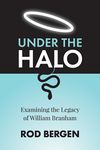
- ↑ Under the Halo, Introduction, on the Houston photograph. See also Was William Branham Honest.
- ↑ Under the Halo, chapter 12, "The Seven Church Ages."
- ↑ Under the Halo and An Analysis of William Branham's Visions and Prophecies set out the archival research, including the Life Saving Station logbooks.