An Overview of Bernard's The Oneness of God: Difference between revisions
Created page with "{{Top of Page}} = Overview: ''The Oneness of God'' by David K. Bernard = David K. Bernard's ''The Oneness of God'' is the most thorough and carefully written defense of Oneness Pentecostal theology available. It takes the Bible seriously, defends the full deity of Jesus Christ, and calls readers to a Christ-centered faith. For these reasons it deserves a serious response rather than dismissal. But serious engagement reveals that the book's central claim — that Jesus C..." |
No edit summary |
||
| (3 intermediate revisions by the same user not shown) | |||
| Line 1: | Line 1: | ||
{{Top of Page}} | {{Top of Page}} | ||
{{Bernard Oneness}} | |||
= Overview: ''The Oneness of God'' by David K. Bernard = | = Overview: ''The Oneness of God'' by David K. Bernard = | ||
David K. Bernard's ''The Oneness of God'' is the most thorough and carefully written defense of Oneness Pentecostal theology available. It takes the Bible seriously, defends the full deity of Jesus Christ, and calls readers to a Christ-centered faith. For these reasons it deserves a serious response rather than dismissal. But serious engagement reveals that the book's central claim — that Jesus Christ is personally the Father and the Holy Spirit, not a distinct divine Son — cannot be sustained from Scripture. The book's arguments are built on misread texts, circular reasoning, unverifiable historical claims, and a doctrinal framework with consequences the author never fully faces. | David K. Bernard's ''The Oneness of God'' is the most thorough and carefully written defense of Oneness Pentecostal theology available. It takes the Bible seriously, defends the full deity of Jesus Christ, and calls readers to a Christ-centered faith. For these reasons it deserves a serious response rather than dismissal. But serious engagement reveals that the book's central claim — that Jesus Christ is personally the Father and the Holy Spirit, not a distinct divine Son — cannot be sustained from Scripture. The book's arguments are built on misread texts, circular reasoning, unverifiable historical claims, and a doctrinal framework with consequences the author never fully faces. | ||
| Line 54: | Line 54: | ||
== Why This Constitutes False Doctrine == | == Why This Constitutes False Doctrine == | ||
From our work in publishing ''[[Under The Halo]]'', we have come up with 6 primary characteristics of false doctrine: | |||
1. False doctrine is based on scripture. | |||
David Bernard and all proponents of Oneness doctrine use proof texts to back up their doctrine. A proof text is a biblical statement or citation that [purportedly!] doesn’t require a context to be coherent and meaningful.<ref>Michael R. Emlet, Crosstalk: Where Life & Scripture Meet (Greensboro, NC: New Growth Press, 2009).</ref> It’s a scripture intended to show the basis for a particular theological assertion. The danger in proof-texting is well known: proof-texts can be misused and their contextual meaning distorted to use them to support teachings they don’t really support.<ref>John M. Frame, The Doctrine of the Knowledge of God (Phillipsburg, NJ: P&R Publishing, 1987), 197.</ref> This is exactly what Bernard does in his book. | |||
2. False doctrine is plausible. | |||
On the surface, Oneness doctrines appear plausible, but they don’t stand up under close scrutiny. I understand this because I was raised in a Oneness Pentecostal church and never really questioned its claims for most of my adult life. | |||
3. False doctrine is self-centered and self-focused. | |||
Oneness theology points to non-Oneness churches as following false doctrine. It encourages people to stay away from other churches. Oneness churches are almost generally insular and self-focused. | |||
4. False doctrine is reductionist. | |||
In Oneness churches, the gospel is reduced to Acts 2:38. You need to reject Trinitiarianism in favour of Oneness. Salvation only comes through repentance, baptism in Jesus name, and speaking in tongues as a demonstration that you have the Holy Spirit. People who have not been baptized in Jesus name or have not spoken in tongues are not real Christians. That is the heresy of Oneness theology. | |||
5. False doctrine is divisive. | |||
Oneness theology is a source of division. The UPCI and most Oneness followers require separation from churches that are Trinitarian. | |||
6. False doctrine rejects the historic teaching of the Christian church. | |||
The ancient church identified the teaching that Father, Son, and Spirit are not genuinely distinct persons but are the same person appearing in different modes, as a heresy. This wasn't a political decision made for convenience. It was a theological judgment that this view misrepresented what the New Testament actually says about God. | The ancient church identified the teaching that Father, Son, and Spirit are not genuinely distinct persons but are the same person appearing in different modes, as a heresy. This wasn't a political decision made for convenience. It was a theological judgment that this view misrepresented what the New Testament actually says about God. | ||
All six characteristics of false doctrine are present in Oneness theology as outlined in ''The Oneness of God.'' We must, therefore, conclude that Oneness theology constitutes false doctrine. | |||
The New Testament describes the Father as distinct from the Son in ways that cannot be reduced to one person playing two roles. The Father speaks to the Son at his baptism while the Spirit descends from outside. The Son prays to the Father with real anguish in Gethsemane. The Father does not spare the Son. The Son says "My God, my God, why have you forsaken me?" The Spirit intercedes within us while the Son intercedes at the Father's right hand. The throne in the new creation belongs to "God and the Lamb" — two persons named side by side in eternal distinction. These are not descriptions of one person acting. They are descriptions of genuine relationship between genuinely distinct persons within the one God. | The New Testament describes the Father as distinct from the Son in ways that cannot be reduced to one person playing two roles. The Father speaks to the Son at his baptism while the Spirit descends from outside. The Son prays to the Father with real anguish in Gethsemane. The Father does not spare the Son. The Son says "My God, my God, why have you forsaken me?" The Spirit intercedes within us while the Son intercedes at the Father's right hand. The throne in the new creation belongs to "God and the Lamb" — two persons named side by side in eternal distinction. These are not descriptions of one person acting. They are descriptions of genuine relationship between genuinely distinct persons within the one God. | ||
| Line 60: | Line 87: | ||
Bernard's book never adequately accounts for this pattern. His framework requires that every verse showing Father-Son interaction is either the human nature in dialogue with the divine nature, or the divine persons acting in their respective roles for our benefit. But neither explanation fits the intimacy, the anguish, the sending and being sent, the loving and being loved — the actual texture of what the New Testament describes. | Bernard's book never adequately accounts for this pattern. His framework requires that every verse showing Father-Son interaction is either the human nature in dialogue with the divine nature, or the divine persons acting in their respective roles for our benefit. But neither explanation fits the intimacy, the anguish, the sending and being sent, the loving and being loved — the actual texture of what the New Testament describes. | ||
God is one. The New Testament insists on this, and so does Trinitarianism. But the God who is one is the God who, within his own eternal being, is Father and Son and Spirit in genuine relationship — and who, in the fullness of time, sent his Son into the world, gave him up for us all, and sent his Spirit into our hearts so that we cry out "Abba, Father." That's the gospel. And it requires the Trinity to be true. | God is one. The New Testament insists on this, and so does Trinitarianism. But the God who is one is the God who, within his own eternal being, is Father and Son and Holy Spirit in genuine relationship — and who, in the fullness of time, sent his Son into the world, gave him up for us all, and sent his Spirit into our hearts so that we cry out "Abba, Father." That's the gospel. And it requires the Trinity to be true. | ||
---- | ---- | ||
{{Bottom of Page}} | |||
{{Bottom of Page | |||
[[Category:Godhead]] | [[Category:Godhead]] | ||
Latest revision as of 17:52, 15 June 2026

This is our series of articles analyzing David Bernard's book, The Oneness of God. You are on the page that is in bold. Click on the links to go to a particular chapter:
- Links to Bernard's other books
- Overview of The Oneness of God
- Chapter 1 - Christian Monotheism
- Chapter 2 - The Nature of God
- Chapter 3 - The Names and Titles of God
- Chapter 4 - Jesus is God
- Chapter 5 - The Son of God
- Chapter 6 - Father, Son and Holy Ghost
- Chapter 7 - Old Testament Explanations
- Chapter 8 - New Testament Explanations: The Gospels
- Chapter 9 - New Testament Explanations: Acts to Revelation
- Chapter 10 - Oneness Believers in Church History
- Chapter 11 - Trinitarianism: Definition and Historical Development
- Chapter 12 - Trinitarianism: An Evaluation
- Chapter 13 - Conclusion
Overview: The Oneness of God by David K. Bernard
David K. Bernard's The Oneness of God is the most thorough and carefully written defense of Oneness Pentecostal theology available. It takes the Bible seriously, defends the full deity of Jesus Christ, and calls readers to a Christ-centered faith. For these reasons it deserves a serious response rather than dismissal. But serious engagement reveals that the book's central claim — that Jesus Christ is personally the Father and the Holy Spirit, not a distinct divine Son — cannot be sustained from Scripture. The book's arguments are built on misread texts, circular reasoning, unverifiable historical claims, and a doctrinal framework with consequences the author never fully faces.
The Central Claim and Why It Fails
The entire book rests on one thesis: Jesus Christ is not the second person of a Trinity but the one God — Father, Son, and Spirit — all manifested in human flesh. The Son is not an eternally distinct person within God; the Son is simply what the eternal Father became when he took on human flesh. As Bernard states plainly in his conclusion, "The Word is eternal; the Son is not."
This claim is directly contradicted by a substantial body of New Testament evidence that Bernard's framework cannot accommodate.
Hebrews 1:2-3 identifies the one who made the universe and sustains all things as God's "Son" — not the Father, not just the eternal Word, but "his Son." Colossians 1:13-17 describes God's "beloved Son" as the one through whom all things were created, who "is before all things," and in whom "all things hold together." Paul is using "Son" language for the preexistent Creator. John 1 describes the Word as personal, distinct from God ("with God"), and yet himself fully God — and identifies him as the one who came "from the Father" (not as the Father) when he became flesh. Philippians 2:5-11 describes "Christ Jesus" as the one who was "in very nature God" and who took on "the nature of a servant" — the one who preexisted is called Christ, not the Father. John 17:5 records Jesus asking to be restored to the glory "I had with you before the world began" — a personal memory of personal glory with the Father before creation, not a plan in the Father's mind.
Bernard must read all of these as describing the preexistent Father or as referring to an ideal plan in God's mind. But in text after text, Paul and John use "Son" and "Christ" for the preexistent one. The Word/Son distinction Bernard needs — sharp enough to allow the Word to preexist eternally as a person while the Son does not — is his own construction, not the New Testament's.
The Proof Texts Don't Say What Bernard Needs Them to Say
Bernard's case for Jesus being the Father rests on a small number of texts that, on careful reading, don't make the identification he needs.
Isaiah 9:6 — The title "Everlasting Father" given to the Messiah is a royal character description, not a Trinitarian identity statement. "Father" (av) in the Old Testament is used for rulers who care for their people, not as a technical title for the first person of the Trinity. The other titles in the same verse — Wonderful Counselor, Prince of Peace — describe the Messiah's character, not his identity with other divine persons. Not a single reputable commentator in Jewish or Christian history, before Oneness Pentecostalism, has read this verse as making Jesus personally identical to God the Father. And the Septuagint, the Bible version that Jesus and the authors of the New Testament primarily used, doesn't read the way Bernard wants it to read.
John 10:30 — "I and the Father are one." Bernard reads this as Jesus saying he is the Father. But Jesus uses the plural "we are" (esmen), not "I am." He uses the neuter form for "one" (hen), meaning "one thing" — unity of essence — not the masculine form that would express one person. The Jews who tried to stone him understood his claim as "you, a human being, are claiming to be God" — a claim to divine status, not a confession of personal identity with the Father. The surrounding verses (25, 29, 36, 38) have Jesus speaking of himself as distinct from the Father.
John 14:9 — "Whoever has seen me has seen the Father." Jesus does not say "I am the Father." He says seeing him is seeing the Father, because he perfectly reveals and represents the Father. The very next sentence (v. 10) explains: "I am in the Father and the Father is in me" — mutual indwelling between two persons, not one person in himself. Verse 6 says "no one comes to the Father except through me" — you cannot go through yourself to get to yourself.
2 Corinthians 3:17 — "The Lord is the Spirit." Bernard takes this as identifying Jesus with the Holy Spirit. But Paul is explaining an Old Testament passage (Exodus 34:34) about Moses turning to the Lord. Paul's point is about the parallel between Moses encountering God's presence in the old covenant and believers encountering the Spirit's liberating presence in the new covenant. Three verses earlier (3:3-6), Paul has explicitly distinguished Christ from the Spirit. "The Lord is the Spirit" is not a doctrine of Christ's personal identity with the Spirit — it's a statement about the Spirit's role as the Lord's presence in the new covenant.
A Framework Built to Be Immune to Challenge
One of the most serious problems in the book is not any single argument but the overall interpretive method. In Chapter 8, Bernard introduces the "Four Aids" — a set of principles for reading any verse that seems to show Father and Son as distinct. The core of the framework is the "dual nature" principle: any time Jesus says or does something that suggests he is subordinate to the Father, limited, or separate from the Father, it's the "human Son" speaking. Any time Jesus says or does something that suggests divine authority or unity with God, it's the "divine Father" within him.
The problem is that this framework has no off switch. Any verse that appears to distinguish Father from Son can be explained by the dual-nature rule. Any verse that shows their unity can be read as proof of identity. No verse in the New Testament, on this method, can ever count as evidence against the Oneness position. When a system of interpretation has an answer for every possible counter-evidence before that evidence is even considered, it has stopped being an argument and become a closed loop.
The historical argument in Chapter 10 runs the same pattern. When early church writings look Trinitarian, they're either misread, interpolated by later scribes, or the result of early corruption. When modalists are condemned as heretics, it just shows how early the apostasy spread. No historical evidence is ever allowed to weigh against the Oneness conclusion.
The Historical Argument Doesn't Hold
Bernard argues that Oneness theology was the faith of the early church, that early teachers who denied the Trinity were suppressed Oneness believers, and that Trinitarianism is a fourth-century development. This argument fails at every level.
The early church's own writers tell a different story. Ignatius of Antioch, writing around AD 110 — close enough to the apostolic age to have known people who knew the apostles personally — describes Christ as having existed "before the ages with the Father," coming forth from the Father, and returning to the Father. This is not Oneness language. Polycarp, the student of the Apostle John himself, died with a prayer on his lips addressed to God the Father, offered through Jesus Christ, with the Holy Spirit — three distinct parties in a single act of worship. Nobody in his congregation found this strange.
When this teaching — that Father, Son, and Spirit are one person in different modes — actually was introduced in the late second century, it caused a massive controversy. Tertullian wrote against it, Hippolytus wrote against it, and the Roman church debated it for years. Tertullian — the very man Bernard quotes to show Oneness was the majority view — says in the same letter that this teaching was introduced to Rome "for the first time" by Praxeas, arriving "from Asia." He calls it a novelty. If Oneness had been the original faith and Trinitarianism had gradually displaced it, the historical record would show Trinitarians introducing something new and the existing Oneness majority resisting. No such record exists.
The Consequences Bernard Doesn't Fully Face
If Oneness theology is true, and if Jesus-name-only baptism and Spirit baptism with tongues are necessary for salvation as Oneness theology teaches, then the logical consequence is that almost no one was saved between approximately AD 200 and the founding of the modern Oneness Pentecostal movement in 1914. Every person who died for Christ in the medieval church, every martyred Reformer, every Christian baptized in the name of the Father, Son, and Spirit across sixteen centuries — all were outside the means of salvation. Bernard does not say this directly. But his premises require it, and the fact that he doesn't face it suggests he hasn't followed his own argument to its conclusion.
Beyond the salvation question, the Oneness framework undermines two central Christian doctrines at the point where they matter most.
The atonement requires a genuine distinction between Father and Son. The gospel's power lies in the Father giving his Son — "God so loved the world that he gave his one and only Son." The Son bearing the weight of wrath and estrangement while the Father looked on. The beloved Son forsaken at the cross so that we need never be. If Jesus is the Father wearing a human costume, there is no genuine giving, no genuine sacrifice of a beloved person, no real interpersonal love poured out at Calvary. The cross becomes God handing himself over to himself. That's a different story, and it's a lesser one.
The Incarnation is also weakened rather than strengthened. "The Word became flesh" means God genuinely became a man — not that God moved into a man. If the divine Father is the divine person within Jesus, and the human Son is the human nature he inhabits, then Jesus is closer to a vessel than a genuine person who is fully God and fully man. Boyd shows that the Oneness framework actually ends up with a less complete Incarnation than Trinitarianism: if the divine Father inside Jesus is not genuinely experiencing what the man Jesus experiences, then what the Word became is not really flesh — it's a body the Word lives in.
Why This Constitutes False Doctrine
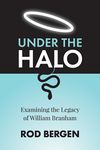
From our work in publishing Under The Halo, we have come up with 6 primary characteristics of false doctrine:
1. False doctrine is based on scripture.
David Bernard and all proponents of Oneness doctrine use proof texts to back up their doctrine. A proof text is a biblical statement or citation that [purportedly!] doesn’t require a context to be coherent and meaningful.[1] It’s a scripture intended to show the basis for a particular theological assertion. The danger in proof-texting is well known: proof-texts can be misused and their contextual meaning distorted to use them to support teachings they don’t really support.[2] This is exactly what Bernard does in his book.
2. False doctrine is plausible.
On the surface, Oneness doctrines appear plausible, but they don’t stand up under close scrutiny. I understand this because I was raised in a Oneness Pentecostal church and never really questioned its claims for most of my adult life.
3. False doctrine is self-centered and self-focused.
Oneness theology points to non-Oneness churches as following false doctrine. It encourages people to stay away from other churches. Oneness churches are almost generally insular and self-focused.
4. False doctrine is reductionist.
In Oneness churches, the gospel is reduced to Acts 2:38. You need to reject Trinitiarianism in favour of Oneness. Salvation only comes through repentance, baptism in Jesus name, and speaking in tongues as a demonstration that you have the Holy Spirit. People who have not been baptized in Jesus name or have not spoken in tongues are not real Christians. That is the heresy of Oneness theology.
5. False doctrine is divisive.
Oneness theology is a source of division. The UPCI and most Oneness followers require separation from churches that are Trinitarian.
6. False doctrine rejects the historic teaching of the Christian church.
The ancient church identified the teaching that Father, Son, and Spirit are not genuinely distinct persons but are the same person appearing in different modes, as a heresy. This wasn't a political decision made for convenience. It was a theological judgment that this view misrepresented what the New Testament actually says about God.
All six characteristics of false doctrine are present in Oneness theology as outlined in The Oneness of God. We must, therefore, conclude that Oneness theology constitutes false doctrine.
The New Testament describes the Father as distinct from the Son in ways that cannot be reduced to one person playing two roles. The Father speaks to the Son at his baptism while the Spirit descends from outside. The Son prays to the Father with real anguish in Gethsemane. The Father does not spare the Son. The Son says "My God, my God, why have you forsaken me?" The Spirit intercedes within us while the Son intercedes at the Father's right hand. The throne in the new creation belongs to "God and the Lamb" — two persons named side by side in eternal distinction. These are not descriptions of one person acting. They are descriptions of genuine relationship between genuinely distinct persons within the one God.
Bernard's book never adequately accounts for this pattern. His framework requires that every verse showing Father-Son interaction is either the human nature in dialogue with the divine nature, or the divine persons acting in their respective roles for our benefit. But neither explanation fits the intimacy, the anguish, the sending and being sent, the loving and being loved — the actual texture of what the New Testament describes.
God is one. The New Testament insists on this, and so does Trinitarianism. But the God who is one is the God who, within his own eternal being, is Father and Son and Holy Spirit in genuine relationship — and who, in the fullness of time, sent his Son into the world, gave him up for us all, and sent his Spirit into our hearts so that we cry out "Abba, Father." That's the gospel. And it requires the Trinity to be true.
Footnotes